The Problem
Design systems promise consistency and speed. But in practice they often introduce an uncomfortable challenge. At Step, our design system had matured into a large and powerful foundation — 265 design tokens covering color, typography, spacing, and border radius, and 281 reusable components. Yet there was no reliable way to ensure those tools were actually being used.
The Gap
Designers could still introduce hardcoded hex colors, arbitrary spacing values, and custom components that duplicated existing ones. These issues weren't visible until someone carefully inspected a file during design review. Over time this created a familiar dynamic inside the team. Design leaders became responsible for auditing compliance during reviews — which meant conversations that should have focused on product quality often drifted into token enforcement, component policing, and small implementation details. The effect was subtle but real. Reviews slowed down, designers felt scrutinized, and leaders spent time on work that didn't meaningfully move the product forward.
The core issue wasn't discipline. It was visibility.
The Insight
Design reviews were doing two fundamentally different jobs: evaluating the quality of the product experience, and auditing adherence to the design system. When leaders are forced to do both simultaneously, the conversation often shifts toward small implementation details rather than bigger product questions. This creates unnecessary tension inside design teams.
Design system enforcement shouldn't rely on human vigilance. It should be automatic.
Reframing the Problem
Instead of improving review processes, we reframed the problem entirely: what if design system compliance could be checked automatically inside the design tool? The goal wasn't governance — it was self-service visibility for designers. If designers could instantly see when something violated the design system and fix it with a single action, then enforcement would move from leadership oversight to everyday workflow. This would allow design reviews to focus on what matters most: product thinking and user experience.
The Solution
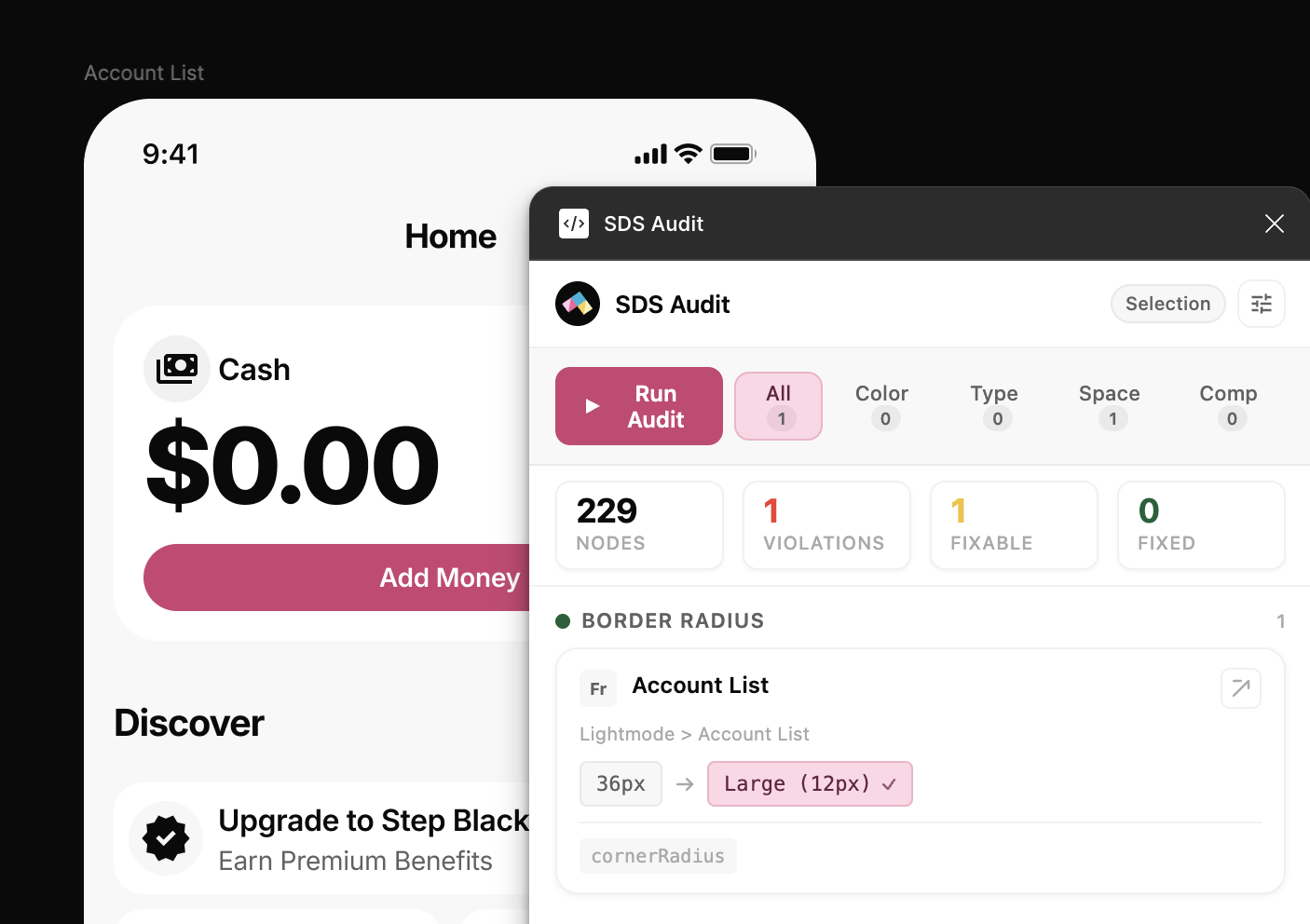
I designed and built a Figma plugin that audits design files against the Step Design System. Designers can run the tool directly inside Figma on either the current page or a specific selection. The audit scans layers and flags common design system violations, including hardcoded color values, unbound token variables, raw spacing numbers, and instances that don't come from the design system library. Whenever possible, the plugin suggests the correct semantic token and allows designers to apply the fix in a single click.
Organizational Impact
- Design reviews focus more on product decisions
- Token violations are caught earlier in the process
- System adoption improves naturally
- Designers feel less scrutinized
Leadership Takeaway
The Most Meaningful Impact Was Cultural
Instead of design leaders enforcing system usage during reviews, designers now have a quick way to validate their work before sharing it. This shifted design system enforcement from manager oversight to designer workflow.
Great Design Systems Reduce Operational Load
By automating compliance checks, this project removed a recurring source of friction between designers and leadership while improving the consistency of the product itself. In doing so, it transformed design system enforcement from a people problem into a tooling capability.