
Context — Turning financial intentions into automatic habits
One of the most common requests from Step customers was simple: help me save part of my paycheck automatically. We heard it through Acute, our in-app feature request platform, and during early Savings Goals research. We initially prioritized round-ups as a more accessible starting point for customers with limited funds.
Over time, behavioral data showed customers already moving money into Savings Goals to protect it—from their own spending and unexpected charges like subscriptions. That helped us build conviction in a more direct solution: automatically distributing a portion of each paycheck to savings.
For this project I wanted to improve our process and demonstrate how I thought AI could best be used to improve velocity.
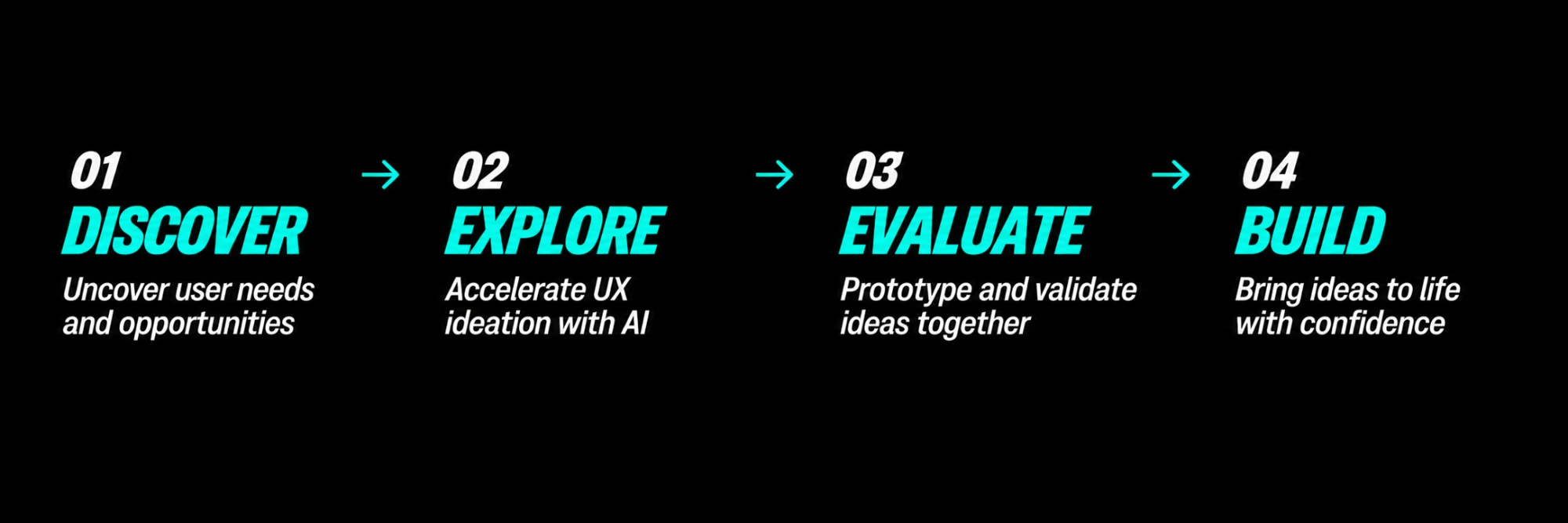
Process — Structure first, then exploration
1. Align on the problem.
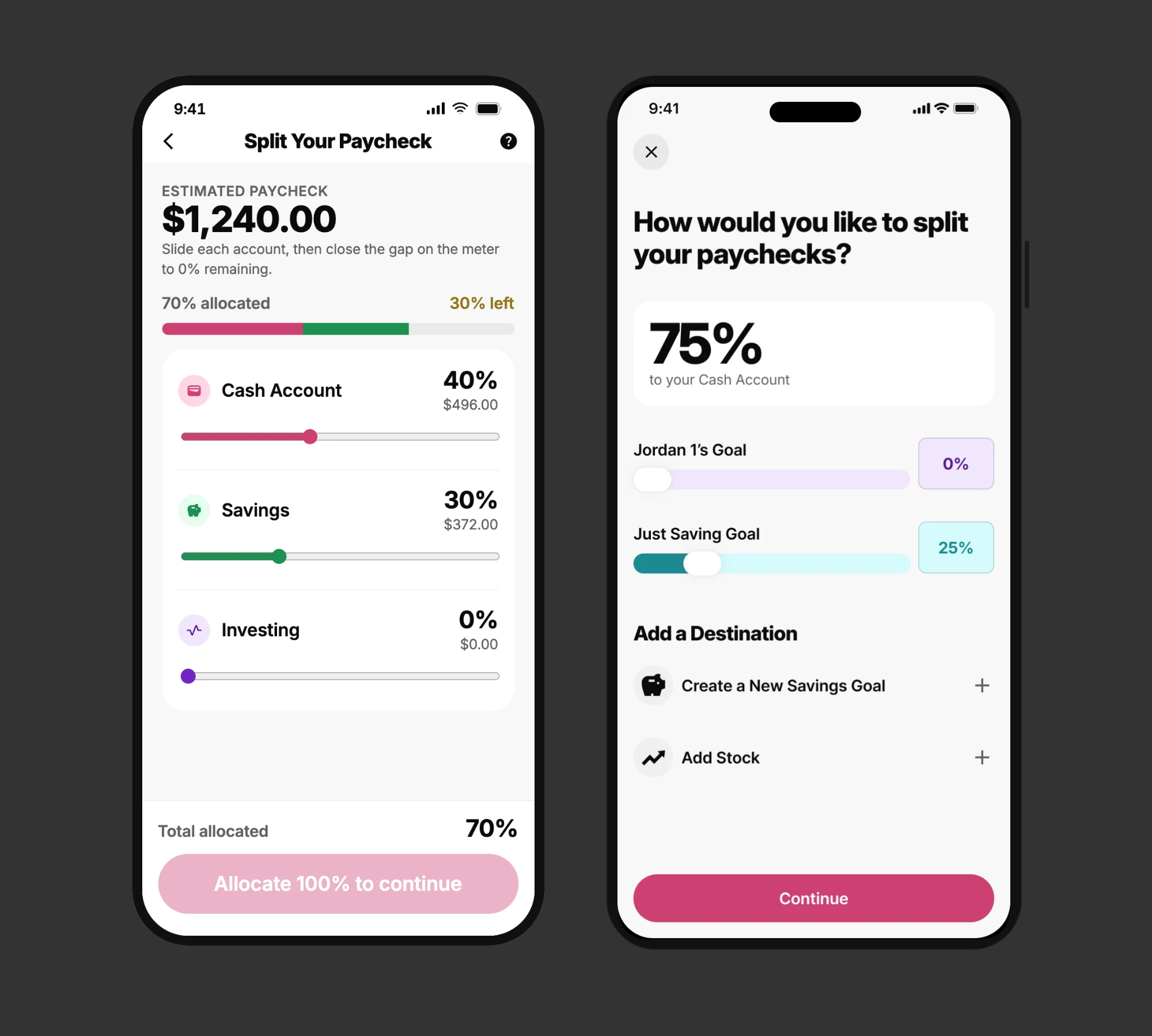
With a rough PRD in place, I translated the opportunity into a design spec covering the core requirements: create a paycheck split, select destinations, choose percentages, and manage the setup. This aligned the team and gave AI clear constraints. Structure mattered as much for the tools as it did for the people using them.
2. Explore in parallel.
I designed UX concepts while prompting Claude Design to generate alternative approaches. Within a day or two, we had promising directions to discuss—a phase that would ordinarily have taken me closer to a week. Claude’s designs weren't polished enough to ship, but they surfaced ideas I hadn't considered. I rebuilt the strongest concepts in Figma to meet our standards for craft and consistency.
3. Prototype in the codebase.
After reviewing the directions as a team, I used Claude Code to build interactive prototypes of the leading concepts directly in our codebase. I supplied detailed prompts, the design spec, requirements, and Figma files. Internal testing lets us evaluate behavior rather than static screens. I iterated on the preferred direction and brought in useful interactions from concepts we had set aside. For example in testing some people mentioned that they preferred text inputs to change the percentages so we added those.
4. Build confidence before implementation.
Engineering did not reuse the AI-generated code in production. The prototypes were valuable as decision-making and communication tools: they helped us align on the intended experience and gave engineering a concrete reference before implementation. They also allowed us to work out some of the issues with initial design.
The solution — Put your paycheck to work automatically
Customers choose what percentage of their paycheck goes to everyday spending, Savings Goals, and Stocks. When direct deposit arrives, Step distributes the selected amounts automatically. A one-time setup turns an intention to save or invest into a recurring action.
Impact — Early adoption and meaningful financial behavior
These are early indicators, not final results since we rolled the feature out slowly with no comms. Adoption is still relatively small across the broader customer base, and comparisons between adopters and other direct-deposit customers are affected by self-selection. The feature redistributes money already inside Step rather than creating new deposits.
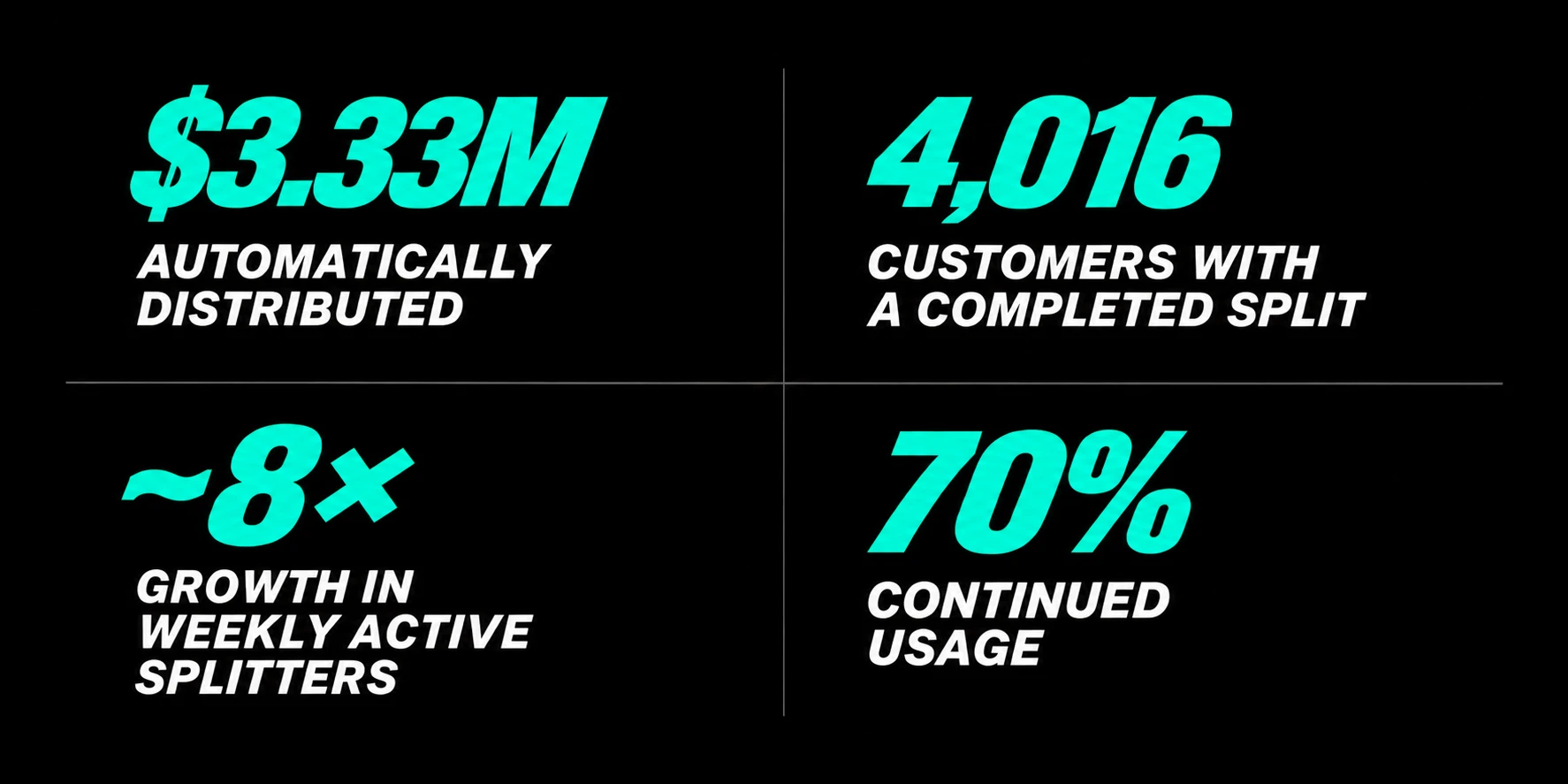
- Within a couple months over 4,000 customers completed at least one split.
- Over $3 million was distributed within Step.
- Weekly active splitters grew approximately eightfold over the first ten weeks the feature was live.
- ~30% of customers with a recent payroll or income direct deposit had tried the feature.
- Around 70% of customers who set up the feature still have an active Paycheck Split.
- Approximately 98% of dollars distributed went to savings, reinforcing the original customer need.
Reflection - AI changed the economics of exploration
The biggest takeaway wasn't that AI could design or code faster than I could. It made trying ideas less expensive. We could consider more directions, test working experiences, and combine the best ideas without the same upfront investment.
The quality still depended on people: defining requirements, recognizing useful ideas, refining the craft, and making decisions together. AI accelerated production; it didn't replace judgment or team alignment.
The opportunity isn't just to ship faster. It's to spend less time producing artifacts and more time making the decisions that lead to better products.