
About Step
Step is a digital bank designed to improve the financial future of the next generation launched in the fall of 2020. By 2023, we had built a strong product and large user base — but the business needed to evolve. We needed to increase profit margins, introduce sustainable revenue streams, and retain users as they aged into adulthood.
The challenge
One promising solution was a premium subscription offering. However, we knew that introducing a paid subscription could raise suspicion among our audience. Gen-Z users are highly skeptical of financial institutions. Charging for features that previously felt free could easily damage the trust we had built.
How do we introduce a premium banking subscription that users feel is genuinely valuable rather than exploitative?
Understanding the User
Getting the bundle right was important, so research played a central role. We gathered feature requests from existing users (interest on savings, cashback, metal card), then ran a conjoint analysis with a large sample of customers. Price sensitivity was extremely high. Users strongly valued cashback — particularly related to food and dining. The metal card generated interest but wasn't as valuable to users as we expected it to be.
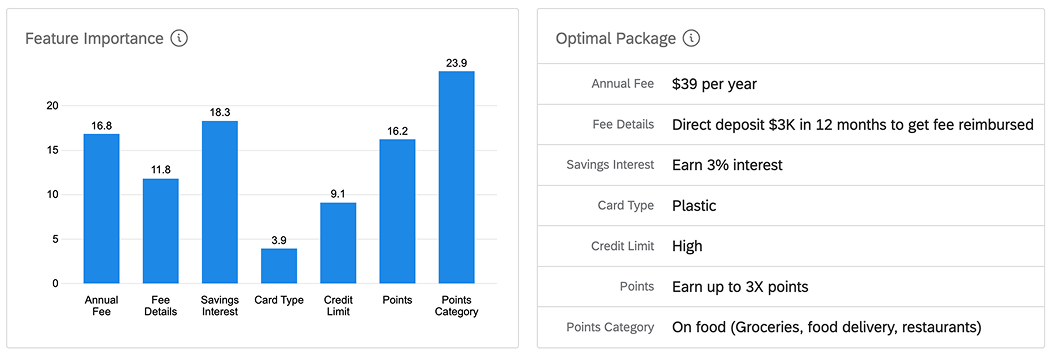
Gen-Z users were not looking for a premium experience in the traditional sense. They wanted a product that actually helped them financially
Strategy & Alignment
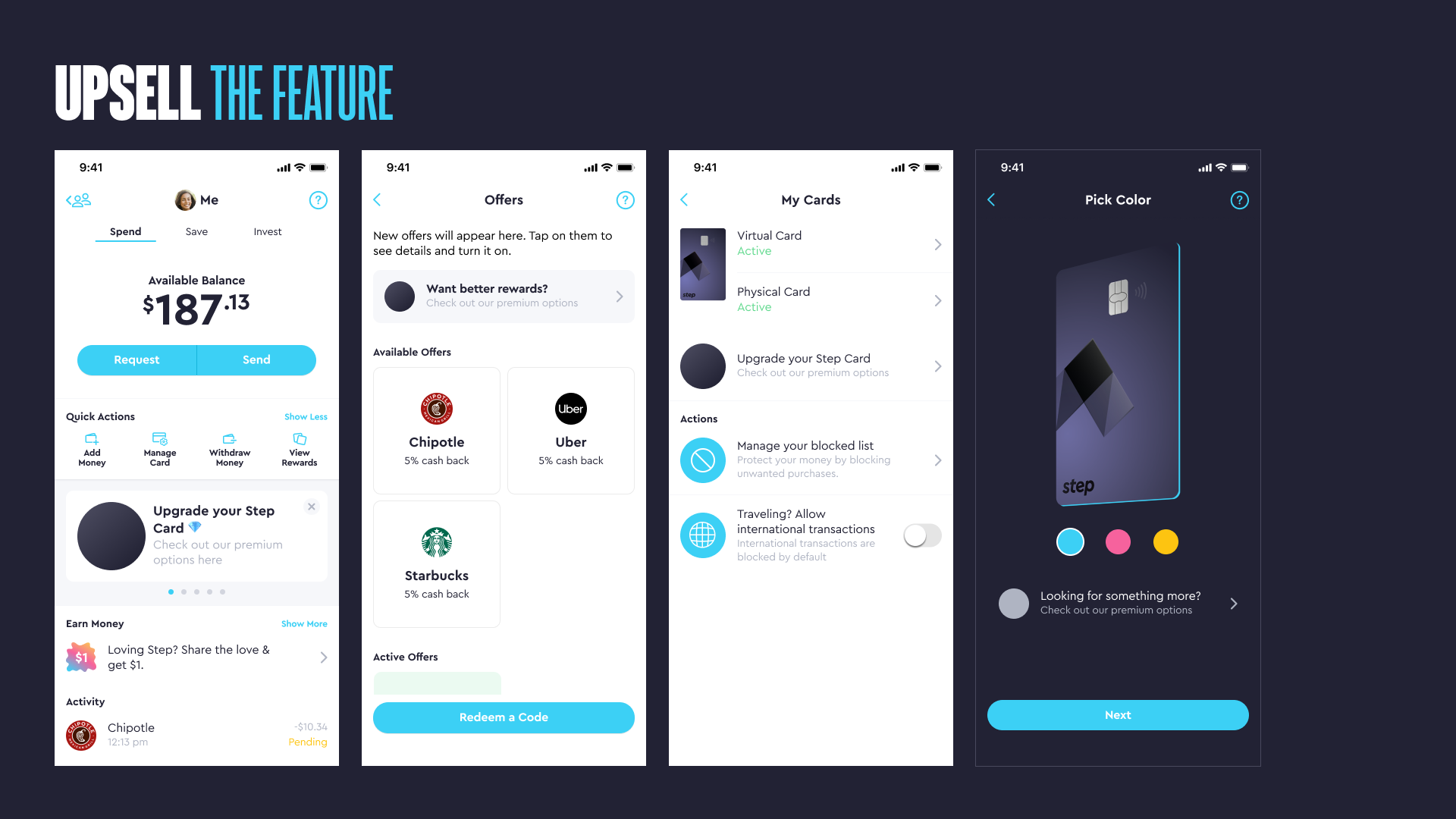
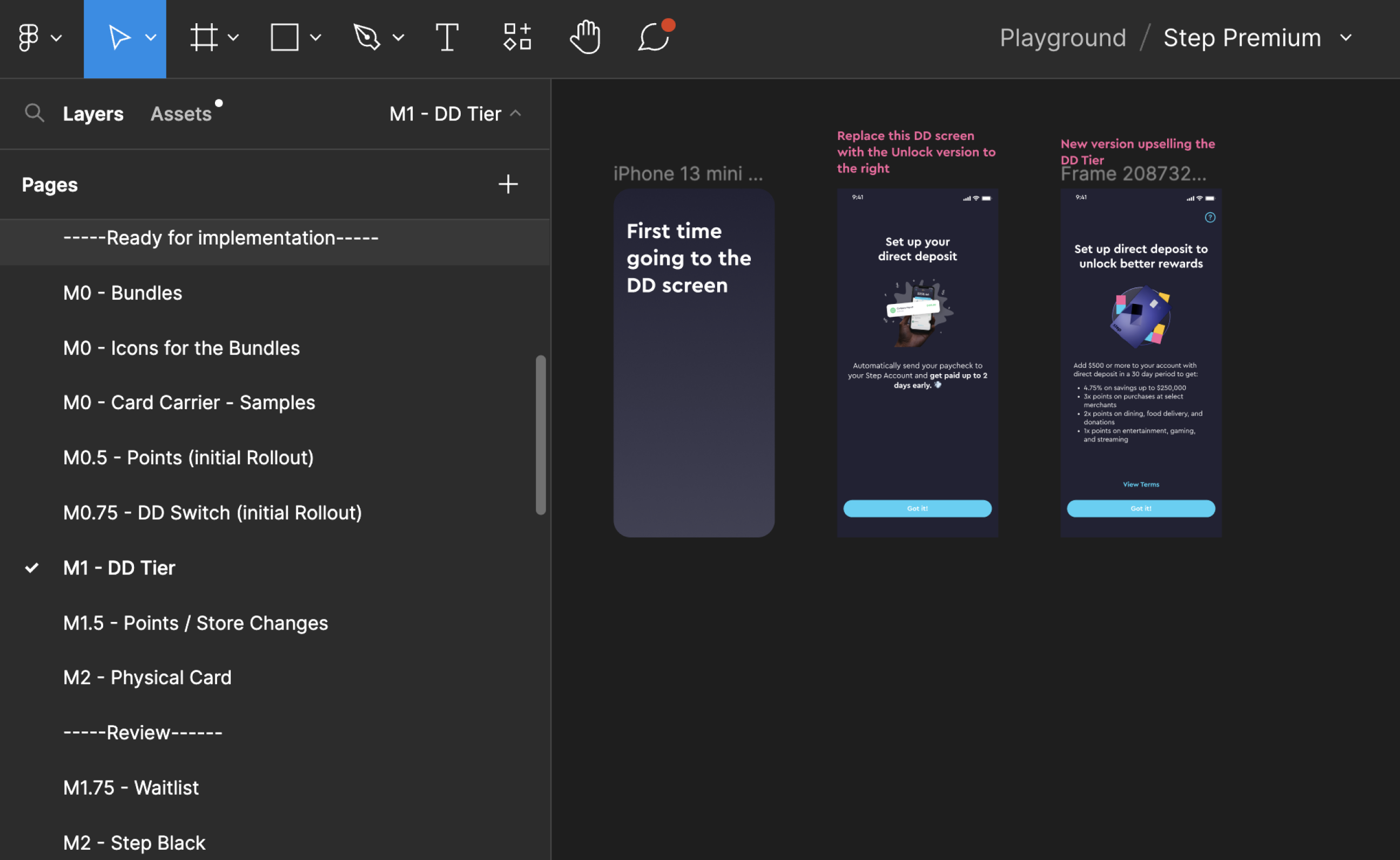
To accelerate alignment across product, marketing, and executive teams, I facilitated an in-person working session to define business objectives, scope initial features, and set launch milestones—critical for capturing summer direct deposits. Throughout the design process, we prioritized clear communication and strong organization.
Iterating with Real Users
We launched with two tiers — Step+ and Step Black — in May 2023. Real user behavior quickly revealed: users preferred clarity over status, monthly billing significantly reduced friction, and the metal card generated excitement but wasn't in line with what our users valued. We combined the tiers into a single offering, made Step Black free for users with direct deposit, and separated the metal card into a one-time purchase for those who wanted it.
Final Product
After almost a year of iterating with real users, we landed on a single offering:
- $4.99/month or free with direct deposit
- 5.00% APY on savings
- Up to 8% cashback rewards
- Optional metal card for $49.99
Impact
- Two new revenue streams introduced
- Direct deposit adoption more than doubled
- ACH funding increased 300% over the first year
- Shifted Step's positioning from teen bank to young adult financial platform
What I learned
Premium Products Must Deliver Real Value
Our research showed that Gen-Z users were skeptical of products that felt cosmetic or status-driven. By focusing on cashback and savings rewards instead of luxury features, the subscription aligned with users’ real financial priorities.
Soft Launching Accelerates Learning
Internal debates or user research alone couldn’t fully answer questions about pricing, tiers, or perceived value. Soft launching the product allowed us to observe real user behavior and evolve the product into a simpler and more effective offering.
Alignment Is a Design Problem
Because the subscription touched so many areas of the product and organization, communication and documentation were essential. Clear design documentation, organized Figma files, and consistent design reviews helped maintain alignment across teams and kept the project moving quickly.
Conclusion
The biggest design challenge wasn’t building a premium subscription. It was ensuring the product remained aligned with Step’s mission: improving the financial future of the next generation. Designing the product around helping users earn more and manage their money better allowed us to introduce a new revenue model without sacrificing that trust.